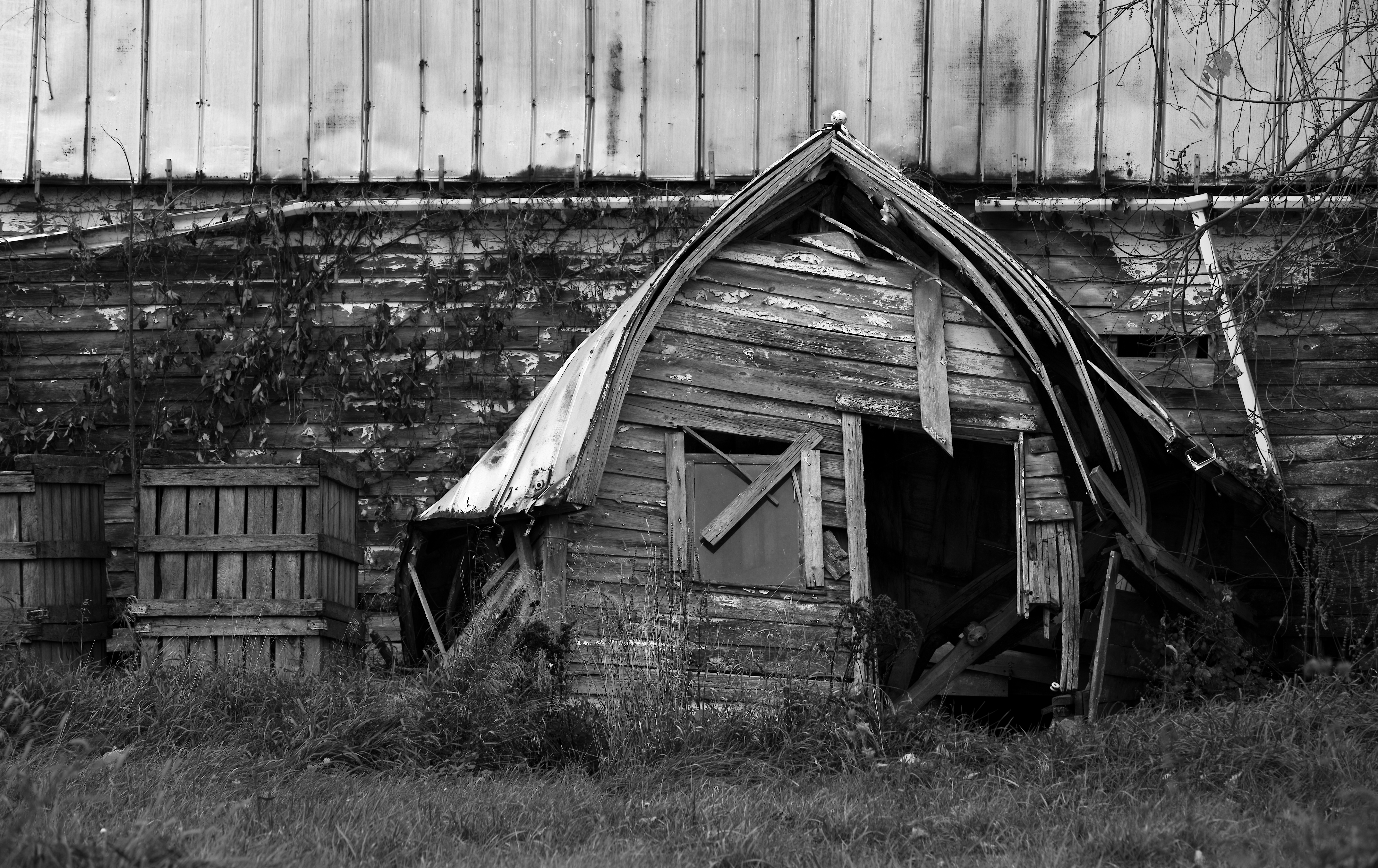
Echoes of a Family Farm
A collapsing barn in West Michigan stands as a haunting reminder of a profound shift in American agriculture. Built at the turn of the 20th century, structures like this once anchored family farms that defined rural life across the Midwest. These were self-sustaining operations—diverse in their crops, powered by family labor, and guided by seasonal rhythms rather than quarterly profits.
But beginning in the mid-1900s, the landscape began to change. Mechanization, chemical fertilizers, and government subsidies encouraged farms to grow larger and more specialized. By the 1970s and ’80s, the rise of agribusiness and corporate consolidation accelerated the decline of small family farms. As market prices favored scale and efficiency, many families found themselves unable to compete. Debt, foreclosure, and migration followed, leaving behind the physical skeletons of their livelihoods - barns like this one, sagging under the weight of economic and cultural abandonment.
Today, this weathered barn bears silent witness to that transformation. Its warped boards and collapsed frame tell the story of a nation’s turn toward industrial corporate agriculture and away from the intimate, intergenerational bonds that once tied people to the land. In its decay lies not just loss, but a record - a reminder of the resilience, labor, and humanity that once shaped America’s rural heart.